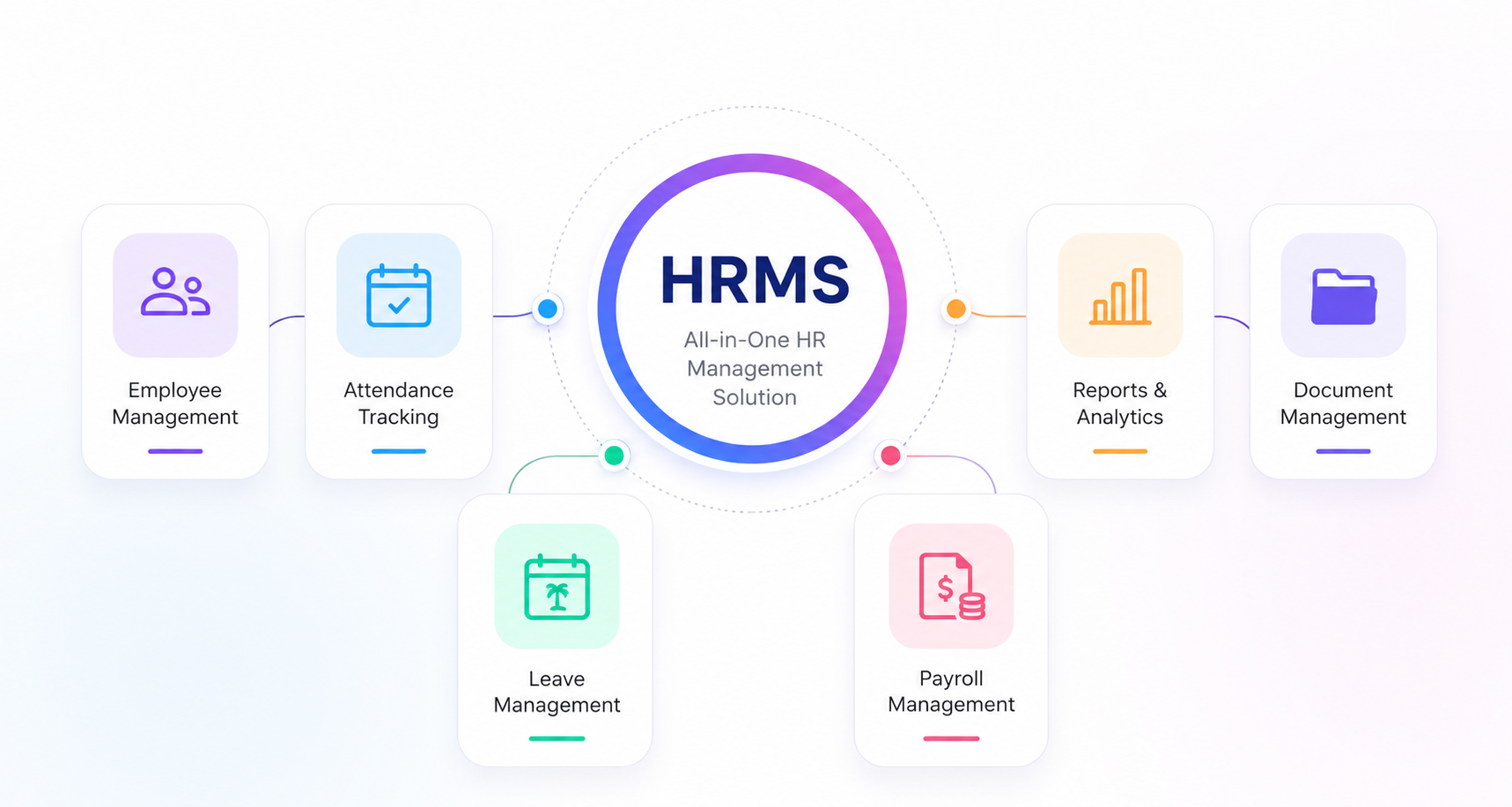
Why Businesses Need HRMS Software
As businesses grow, managing HR operations manually becomes increasingly difficult. Traditional methods such as spreadsheets, paper records, and disconnected systems often lead to inefficiencies, errors, and compliance challenges. A modern HRMS Software helps organizations overcome these challenges by automating HR processes and centralizing workforce management.
Common HR Challenges Businesses Face
1. Time-Consuming Manual HR Processes
Manual handling of employee records, attendance, leave approvals, and payroll consumes valuable time and increases administrative workload, leaving HR teams with less time for strategic initiatives.
2. Managing Data in Multiple Spreadsheets
Storing employee information across spreadsheets and paper files makes data difficult to update, track, and maintain. It often leads to duplicate records, inconsistencies, and reporting errors.
3. Payroll Delays and Calculation Errors
Manual payroll processing increases the risk of incorrect salary calculations, delayed payments, tax errors, and employee dissatisfaction, especially as the workforce grows.
4. Statutory Compliance Risks
Keeping up with changing labor laws, tax regulations, PF, ESI, gratuity, and other statutory requirements becomes challenging without an automated system, exposing businesses to compliance risks and penalties.
5. Scattered Employee Information
When employee data is stored across different systems, emails, and documents, accessing accurate information becomes difficult. This affects decision-making, reporting, and overall HR efficiency.
6. Challenges of a Growing Workforce
As organizations expand across departments, branches, or locations, manual HR processes become difficult to scale. Managing a larger workforce requires standardized workflows and centralized employee management.
7. Managing Hybrid and Remote Employees
With hybrid and remote work becoming the norm, businesses need a centralized system to manage attendance, leave, approvals, employee communication, and performance regardless of location.
8. Limited HR Visibility and Decision-Making
Without real-time HR data and workforce insights, organizations struggle to monitor employee trends, track productivity, plan resources, and make informed business decisions.